

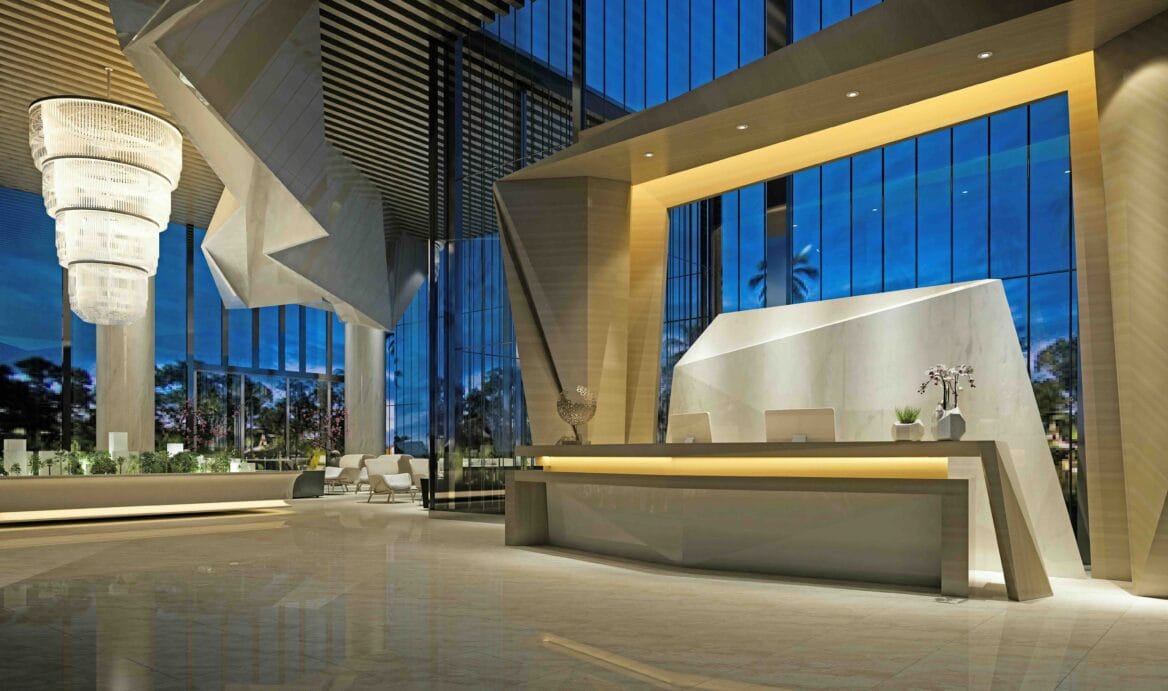
Boutique hospitality is evolving under the pressure of rising guest expectations, digital acceleration, and increasingly complex operating environments. Travelers are seeking curated, frictionless, and highly personalized experiences that extend across every stage of their journey, from discovery and booking to on-property service and post-stay engagement. This shift is reshaping not only how hospitality brands present themselves, but how they operate behind the scenes.
At the same time, the technology ecosystems supporting these experiences have become more fragmented. Property management systems, booking platforms, CRM tools, payment gateways, and third-party integrations are often implemented incrementally, without a unified architecture. Over time, this creates operational environments that are difficult to manage, costly to maintain, and limited in their ability to scale.
According to McKinsey & Company, companies that successfully implement advanced personalization strategies can generate 40% more revenue from those activities than their peers. In hospitality, where experience is the product, this has direct implications for competitiveness and long-term growth.
Boutique brands operate in a particularly complex position within this landscape. Their differentiation is built on uniqueness, flexibility, and attention to detail. Each property often reflects a distinct concept, audience, and service philosophy. This creates a structural mismatch with standardized IT systems, which are designed for consistency rather than adaptability.
As highlighted by Gartner, organizations that align their technology architecture with business strategy are significantly better positioned to adapt to change and sustain growth. For boutique hospitality brands, this alignment increasingly requires moving beyond off-the-shelf solutions toward systems that are designed to truly fit their operations.

The Hidden Complexity of Boutique Hospitality Operations
Boutique hospitality is defined by differentiation, but that differentiation introduces operational complexity at every level. Each property may have its own workflows, staffing models, service standards, and guest engagement strategies. These differences are central to the brand’s identity, yet they create challenges when technology systems attempt to impose standardized processes.
In many cases, off-the-shelf platforms require teams to adapt their operations to the limitations of the software. This often leads to manual workarounds, duplicated data entry, and fragmented communication between departments. Over time, these inefficiencies compound, affecting both staff productivity and service quality.
Research from McKinsey & Company shows that organizations that align technology initiatives with business strategy significantly increase the success rate of digital transformations. In hospitality, this misalignment becomes visible in daily operations: inconsistent guest experiences, delays in service delivery, and limited coordination across teams.
Custom IT systems offer a different approach. Instead of forcing operations into predefined structures, they are built around the organization’s real workflows. This alignment reduces friction, improves efficiency, and creates a more cohesive operating environment. Staff can focus on delivering high-quality service rather than navigating system limitations.
Personalization as a Core Driver of Value
Guest expectations continue to be shaped by experiences across industries such as retail, finance, and digital platforms. Personalization, speed, and seamless interaction have become baseline requirements. In boutique hospitality, where differentiation is closely tied to experience, the ability to deliver personalized service consistently represents a critical advantage.
An analysis from McKinsey & Company highlights that companies that excel at personalization generate significantly more value from customer interactions, with measurable impact on revenue growth and loyalty. Guests expect brands to understand their preferences, anticipate their needs, and deliver relevant experiences without friction.
Personalization, however, depends on data continuity and system integration. When guest data is fragmented across multiple platforms, it becomes difficult to build a complete and actionable profile. Communication becomes inconsistent, and opportunities to enhance the experience are missed.
Custom IT environments enable a unified approach to guest data. Information can be centralized, enriched, and shared across departments in real time. This allows for more precise and consistent personalization, from pre-arrival communication to in-stay services and post-stay engagement. Technology becomes an enabler of experience, supporting the human element rather than replacing it.
Integration & the Power of Connected Systems
Fragmentation remains one of the most significant barriers to efficiency in boutique hospitality. Booking systems, housekeeping tools, CRM platforms, and financial systems often operate independently, creating silos that limit visibility and coordination.
According to McKinsey & Company, organizations that embed data and analytics into their operating models significantly improve decision-making speed and business performance.
Custom IT systems are designed with integration as a foundational principle. Through APIs and middleware, different platforms can be connected into a cohesive ecosystem where data flows seamlessly. This creates a single source of truth that supports both day-to-day operations and long-term strategy.
The impact is tangible. Occupancy data can inform staffing decisions in real time. Guest feedback can be immediately reflected in service adjustments. Financial performance can be tracked across properties with clarity and precision. This level of integration transforms data into a strategic asset.

Security & Data Protection in a Data-Driven Environment
As boutique hospitality brands collect and leverage more guest data, the importance of cybersecurity and data protection continues to grow. Personal information, payment details, and behavioral insights represent valuable assets, but also significant risk exposure.
Frameworks developed by National Institute of Standards and Technology (NIST) provide structured approaches to managing cybersecurity risk and strengthening resilience. These frameworks emphasize the importance of visibility, control, and continuous monitoring.
Custom IT systems allow security to be embedded directly into the architecture. Access controls can be tailored to organizational roles, networks can be segmented to reduce exposure, and monitoring systems can provide real-time insights into potential threats. This approach enhances protection while supporting compliance with evolving regulatory requirements.
For boutique brands, where reputation and trust are closely linked, a robust security posture is essential to maintaining long-term credibility.
Scaling Without Compromising Identity
Growth represents both an opportunity and a challenge for boutique hospitality brands. Expanding into new locations, adding properties, or introducing new services increases operational complexity and places additional demands on technology systems.
Standard solutions often struggle to scale in this context without introducing constraints. They may require compromises that affect service quality or limit the ability to maintain a distinct brand identity across properties.
A study by Boston Consulting Group highlights that organizations investing in scalable digital architectures are more likely to achieve sustainable growth and adapt to market changes.
Custom IT systems provide the flexibility needed to scale effectively. New properties can be integrated into the existing ecosystem without disrupting operations. Processes can be replicated where appropriate and adapted where necessary. This balance allows brands to grow while preserving the unique characteristics that define their value.
The Future of Boutique Hospitality Technology
Boutique hospitality brands operate at the intersection of experience, complexity, and differentiation. Their ability to deliver high-quality, personalized service depends increasingly on the effectiveness of their technology environments. Systems that are fragmented, rigid, or misaligned with operations create friction that limits both performance and growth.
Custom IT systems provide a strategic pathway forward. They align technology with real-world operations, enable seamless integration, enhance data visibility, and support scalable growth. Most importantly, they allow boutique brands to maintain their identity while evolving in a competitive and rapidly changing market.
Empowering Boutique Hospitality with Tailored IT
With the right technology partner, boutique hospitality brands can build systems that reflect their vision and support long-term success. The focus extends beyond solving immediate challenges and moves toward creating a structured, future-ready IT environment.
IT Strategy & Consulting: Tailored roadmaps aligned with your operational structure and priorities.
Managed IT Services: Continuous monitoring, proactive support, and seamless day-to-day operations.
Cybersecurity: Advanced protection, intelligent segmentation, and real-time threat response.
Cloud Infrastructure: Secure, scalable environments with built-in redundancy and backup.
Governance & Compliance: Structured frameworks to manage data, access, and regulatory alignment.
👉 If your organization is ready to modernize its technology environment and build systems that truly fit your operations, contact our team today.